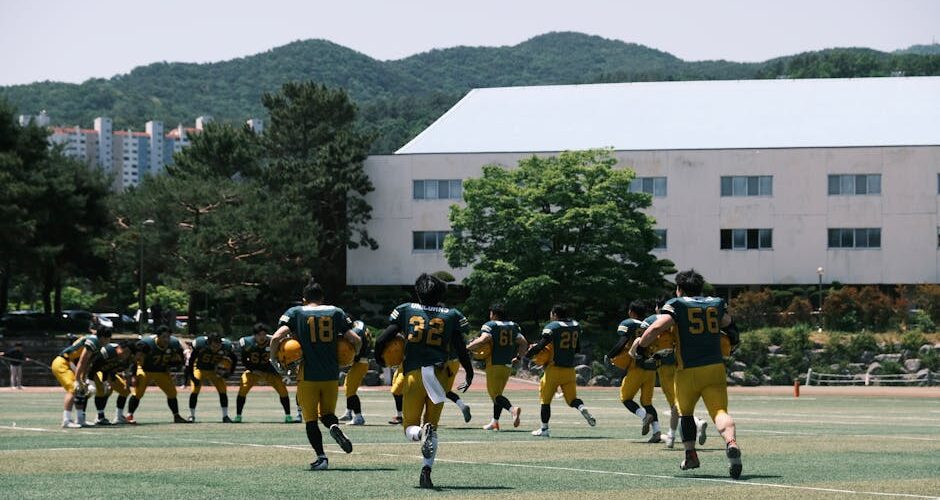
7 Key Differences Between High School and College Level Sports
For many athletes, the journey from high school to college sports marks a pivotal point in their sporting careers. This transition is not merely a change in the level of play but an evolution in terms of commitment, intensity, and opportunities. Here, we delve into the seven key differences that define high school and college-level sports.
1. Level of Competition
The leap in competition from high school to college is significant. In high school, athletes often play against local or regional teams. However, once they enter the college arena—especially within NCAA Division I—the talent pool is not only national but sometimes international. Players are recruited from across the country, leading to a concentration of elite talent. For instance, the Southeastern Conference (SEC) in college football is renowned for its fiercely competitive teams, each boasting players who excelled at their high school levels.
2. Time Commitment
High school sports, while demanding, typically allow athletes to maintain a balanced schedule between academics, social life, and athletics. In college, however, sports can become akin to a full-time job. NCAA Division I athletes often spend upwards of 30 hours a week on training, games, and related activities. This time commitment necessitates exceptional time management skills, as was highlighted in a 2025 survey by the NCAA, revealing that 75% of college athletes felt the pressure of balancing their sport with academics.
3. Coaching and Training Facilities
College athletes are often privy to state-of-the-art training facilities and highly experienced coaching staff, a luxury not always available at the high school level. Universities like Ohio State and Alabama boast multimillion-dollar athletic facilities with cutting-edge technology and equipment. Moreover, college coaches are typically full-time professionals with years of experience and specialized training, offering athletes insights that are more advanced compared to high school coaching.
4. Scholarships and Financial Support
While high school athletes might compete for pride and school spirit, college sports often come with financial incentives. Athletic scholarships can cover a substantial portion of college tuition, making sports not just a passion but a potential financial asset. In 2026, the NCAA reported that approximately 150,000 athletes received either full or partial scholarships, underscoring the tangible benefits of excelling in college sports.
5. Media Exposure and Public Attention
The media landscape changes dramatically from high school to college sports. College games are frequently televised, with networks like ESPN and Fox Sports providing extensive coverage, especially for popular sports like basketball and football. This increased exposure can open doors for athletes, providing platforms for national recognition. The 2025 NCAA Men’s Basketball Tournament, for example, attracted over 18 million viewers, spotlighting college athletes in ways high school sports rarely do.
6. Academic Support and Expectations
Academics remain an integral part of the collegiate athletic experience. Colleges provide significant academic support through tutors, study sessions, and dedicated athlete academic centers to ensure athletes meet educational requirements. However, the expectations are higher. Athletes must maintain a certain GPA to remain eligible to compete, and failure to do so can impact their playing time and scholarship status. The University of North Carolina, for instance, has a robust support system to help athletes balance their dual roles effectively.
7. Cultural and Social Differences
The cultural landscapes of high school and college sports are distinct. College sports often have a broader, more diverse cultural representation, given the diverse student body and faculty. This diversity is reflected in team dynamics and can enrich the athletic experience. Socially, college athletes might find themselves in a more mature and professionally oriented environment, which can be both challenging and rewarding as they learn to navigate new interpersonal situations and networks.
Transitioning from high school to college sports is a significant step in an athlete’s life. Understanding these differences can help athletes prepare better for the challenges and opportunities that lie ahead. Whether it’s the heightened level of competition or the increased media exposure, each aspect of college sports offers a unique growth trajectory for aspiring athletes.
For high school athletes eyeing the collegiate level, it’s crucial to develop a strong foundation in both academics and athletics, as these will serve as the cornerstones of a successful college sports career.